Hey there! As a supplier of hex bolts, I get asked a whole bunch of questions about these little but crucial fasteners. One of the most common questions I hear is, "What is the thread pitch of a hex bolt?" Today, I’m gonna break it down for you in a way that’s easy to understand, so you can have a better grasp of these important specs. Hex Bolt
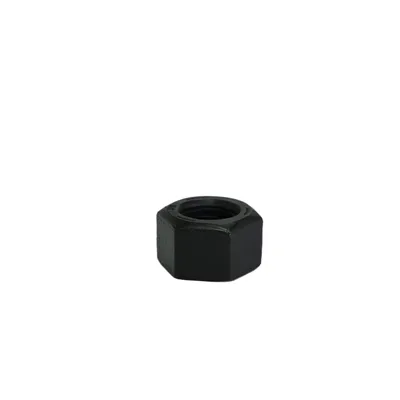
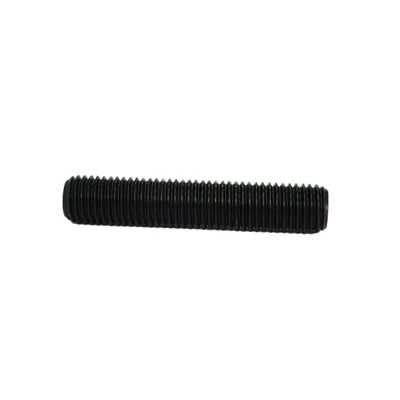
Let’s start with the basics. The thread pitch of a hex bolt is basically the distance between the peaks (or crests) of two adjacent threads. This measurement is super important because it determines how well the bolt will fit into a particular nut or threaded hole. You can think of the thread pitch as the ‘spacing’ of the threads on the bolt. Got it so far?
There are two main ways to measure thread pitch: the Metric system and the Imperial system. In the Metric system, thread pitch is measured in millimeters (mm). So, if you see a hex bolt specified with a metric thread pitch, for example, M10 x 1.5, the "1.5" is telling you that the distance between the crests of the threads is 1.5 mm. Simple enough!
On the other hand, the Imperial system uses threads per inch (TPI) to measure thread pitch. This one might be a little more confusing at first. Instead of measuring the distance between the threads directly, we count how many threads there are within one inch of the bolt’s length. So, if you have a bolt labeled as 1/4 – 20, the "20" represents 20 threads per inch. The finer the threads (higher TPI), the closer the spacing between them, and the coarser the threads (lower TPI), the wider the spacing.
Now, why does all this matter? Well, it’s all about compatibility. If you’re gonna use a hex bolt in a project, you need to make sure the thread pitch of the bolt matches the thread pitch of the nut or the threaded hole it’ll go into. Otherwise, it just won’t work right. You might end up with a bolt that’s too loose or one that won’t go in at all. That’s why we suppliers always make sure to clearly label the thread pitch on our hex bolts.
Another important thing to note is that the thread pitch can also affect the strength and performance of the hex bolt. Finer threads generally provide more holding power because there’s more surface area in contact between the bolt and the nut or hole. This makes them great for applications where you need a secure and tight fit, like in machinery or automotive parts. Coarser threads, on the other hand, are often easier to install and remove, and they’re less likely to get clogged with dirt or debris. They’re typically used in applications where ease of installation is more important, like in some types of construction.
As a hex bolt supplier, I know that different industries have different needs when it comes to thread pitch. For example, the aerospace industry usually requires very precise and fine – pitched hex bolts for their high – performance applications. They need that extra holding power to ensure the safety and reliability of their aircraft components. In contrast, the furniture industry might use coarser – pitched hex bolts because they mainly need to hold pieces together in a less demanding environment, and it’s important to be able to assemble and disassemble the furniture easily.
We offer a wide range of hex bolts with different thread pitches to meet the needs of various customers. Whether you’re working on a DIY project at home or you’re part of a large – scale industrial operation, we’ve got the right hex bolts for you. Our team is always ready to help you choose the perfect thread pitch for your specific application. We can answer your questions, give you advice, and even provide samples so you can test them out in your project.
Here’s a little tip: when you’re choosing a hex bolt based on thread pitch, it’s also important to consider the material of the bolt and the parts it’s going to be used with. Different materials can behave differently under stress, and the combination of materials can affect how well the bolt holds up over time. For example, if you’re using a steel bolt with a softer aluminum nut, you might need to be more careful about the torque you apply to avoid stripping the threads.
So, to sum it all up, the thread pitch of a hex bolt is the distance between thread crests (in metric) or the number of threads per inch (in imperial). It’s a crucial specification that affects how well the bolt fits and performs in your application. Whether you need fine – pitched bolts for a high – precision job or coarser – pitched ones for easy installation, we’ve got you covered.
If you’re in the market for high – quality hex bolts and you’ve got questions about thread pitch or any other aspect of our products, don’t hesitate to reach out. We’re here to make sure you get the right bolts for your project. Contact us for a quote, and let’s start a conversation about how we can meet your hex bolt needs. It’s as simple as that!
Carriage Bolt References:
- Machinery’s Handbook, various editions
- Engineering Materials and Their Applications, third edition
Jiaxing Jinling Hardware Technolgy Joint Stock Co., Ltd.
As one of the most experienced hex bolt manufacturers and suppliers in China, we also support customized service. Please feel free to buy bulk high-grade hex bolt made in China here from our factory. For quotation and price list, contact us now.
Address: No.32, Shenjiadai, Xuyouche Village, Qinshan Subdistrict, Haiyan County, Zhejiang Province, China
E-mail: jlzxl@jinlingfstn.com
WebSite: https://www.china-nut-factory.com/
