Hey there, If you’ve ever spent time in a workshop, loading dock, or even your car engine bay, you’ve probably seen a V belt—they’re the unsung heroes that power everything from conveyor belts in factories to AC compressors in cars. But let’s talk about a game-changer I’ve been supplying for years: cogged V belts. A lot of people still don’t get why these little notched belts are so much better than the standard smooth ones, so I wanted to break it down like I would to a regular guy stopping by my warehouse. No fancy jargon, just real talk about how they actually boost efficiency (and save you cash long-term). Cogged V Belt
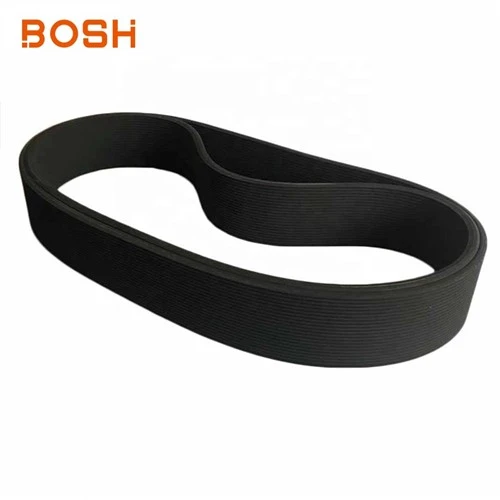
First off, let’s kill the confusion: what even is a cogged V belt? It’s the same shape as a standard V belt—triangular cross-section, fits snug into pulleys—but instead of a smooth bottom surface, it has those little V-shaped notches, or cogs, cut along the inner side. I used to get questions all the time like, “Why would you notch a perfectly good belt? Isn’t that making it weaker?” Nope, it’s the exact opposite. Those cogs are where the magic starts for efficiency, and I’ve seen this play out in hundreds of customer operations over the last decade.
Let’s start with flexibility. Smooth V belts are stiff, right? When they wrap around a pulley (especially a small one), they have to bend sharply, and that takes work—work that’s wasted as heat. Think about bending a thin plastic ruler back and forth; after a few times, it gets warm. That’s exactly what’s happening with a smooth belt, but on a tiny, constant loop. Every time it bends around the pulley, it’s generating friction and heat, which is energy the motor has to put in that doesn’t actually get to power your equipment. Cogged belts, with all those little notches, bend way easier. Those cogs let the belt flex at each notch point instead of the entire surface, so less bending effort, less heat. I had a bakery client last year that switched from smooth to my cogged belts on their conveyor belts. They were running 12 hours a day, 6 days a week, and their motor’s energy usage dropped by 11% in the first month. That’s not a number I pulled out of thin air—their electric bill proved it. Less heat means less energy wasted.
Next up, traction. V belts work because that triangular shape wedges into the pulley’s groove, right? More surface area in contact means more grip. But here’s the thing: when a smooth belt bends around a small pulley, it doesn’t fit as tightly into the groove. The edges lift a little, so you get slippage. Slippage is like throwing money down the drain. Your motor is turning the pulley, but part of that motion isn’t transferring to the belt—it’s just spinning the pulley without moving whatever you’re powering (conveyors, mixers, pumps, whatever). Cogged belts, though, those cogs lock into the pulley’s grooves way better, even on small pulleys. The notches fill in the pulley’s groove gaps, so more contact, less slippage. A car parts manufacturer I supply swears by this: they had a stamping press that kept slipping during high-load runs, which would delay production. After switching to cogged V belts, slippage dropped to almost zero. They didn’t just save on energy—they cut down on downtime because they weren’t having to stop to adjust tension every other day. Tension is another big one: smoother belts need more tension to avoid slipping, and extra tension puts more stress on the motor and the belt itself. Less tension with cogged belts means the motor doesn’t have to work as hard, and the belt lasts longer, too.
Wait, let’s talk about load distribution, because that’s a big one I don’t think enough people mention. When you have a heavy load—like a conveyor full of 500-pound boxes, or a pump pushing thick fluid through pipes—the belt has to handle that pull. With a smooth belt, the entire load is spread across a flat, wide inner surface. But that means all the stress is concentrated in a line where the belt bends around the pulley. Cogged belts? The cogs split that load up. Each tiny notch takes a little piece of the load, so the stress is spread out over multiple points, not just one. That doesn’t just make the belt stronger—it means the power transfer is more consistent. No more jerky starts and stops when the load spikes, which also saves energy because the motor doesn’t have to work as hard to overcome sudden resistance. A construction materials client of mine had a bulk material conveyor that would jerk every time it pulled a full load of gravel. They switched to cogged belts, and the jerks were gone. Their motor run time actually decreased by 8% because they didn’t have to power through those sudden spikes. That’s efficiency you can see in how the equipment runs, not just a number on a bill.
I know what some of you are thinking: “Cogged belts must be more expensive, right?” Yeah, upfront they might cost a little more than standard smooth belts. But let’s do the math, because that’s where the efficiency pays off. Take that bakery I mentioned earlier: they paid 20% more for my cogged belts, but their energy savings from lower usage added up to over $1,200 a month. In less than a month, they made back the extra cost. Then there’s the lifespan. Cogged belts don’t build up as much heat, so they don’t wear out as fast. I’ve seen smooth belts last 6 months in a high-use setting, while a cogged belt would go 18 months. That means less time replacing belts, less downtime, less money spent on parts. Another client: a packaging company that runs 24/7 on their sortation lines. They were replacing smooth belts every 3 months. After switching to cogged, they’re changing them once a year. No more midnight calls to send a tech out to fix a broken belt, no more lost orders because the line is down. That’s efficiency in every sense—energy, time, money.
Let’s get real about other perks that tie into efficiency, too. A lot of industries deal with dust, oil, or moisture in their equipment areas. Cogged belts hold up better in that stuff. The notches don’t trap debris like smooth belts do, so dust and grime don’t build up between the belt and pulley. When a smooth belt has gunk stuck between it and the pulley, that creates extra friction, which uses more energy. Cogged belts shed that debris way easier, so they keep gripping better even in dirty environments. I supply a few sawmills, and the sawdust is nonstop. They tried smooth belts, and within a month, the sawdust was caked on, causing slippage and extra energy use. Now they run cogged belts, and their line doesn’t slow down from debris buildup. Also, temperature extremes—if you’re in a warehouse that gets super hot in summer or cold in winter, cogged belts handle that better too. The notches help dissipate heat faster, so they don’t stretch as much in heat or get brittle in cold. Less stretching means less need for frequent tension adjustments, which means less maintenance time and more consistent power transfer.
Wait, I don’t want to make this sound like cogged belts are perfect for every single job. If you have a super light-duty application, like a small fan in a home, a smooth belt is probably fine. But for anything that’s running hard, high-load, 8+ hours a day, cogged belts are the way to go. I’ve seen too many people stick with the old smooth belts because “that’s how we’ve always done it” and they’re leaving so much efficiency on the table. At the end of the day, efficiency isn’t just about saving energy—it’s about getting more out of the equipment you already have, without spending more.
Here’s the thing I tell every customer when they ask about switching: I’ve been selling these belts long enough to know that the best part isn’t just the numbers. It’s the way their operations run smoother, with less stress, fewer breakdowns, and lower bills. A lot of guys come to me frustrated because their old belts are costing them cash, and by the time they switch, they’re like, “Why didn’t I do this years ago?” That’s the reaction I live for.
If you’re someone who’s dealing with energy bills that are creeping up, frequent belt replacements, downtime from slippage or broken belts, or just want your equipment to run better (and cheaper), let’s chat. I can’t give you a fake website or a made-up phone number, but reach out to talk about your specific setup—what kind of equipment you’re running, how many hours a day, the environment you’re in—and I can help you figure out if cogged V belts are the right move for you. No pressure, no sales pitch fluff, just real advice from someone who’s been in the belt game for years and seen the difference these make. Don’t stick with belts that are wasting your energy and your money. Let’s find the right cogged V belt for your needs.
PU Oil Seal References
- Energy Efficiency and Renewable Energy, U.S. Department of Energy. (2022). Understanding Belt Drives for Industrial Efficiency.
- Machine Design. (2021). The Benefits of Cogged V-Belts for High-Torque Applications.
- Industrial Maintenance & Plant Operations. (2023). Reducing Energy Waste with Optimized Belt Drives.
- Rubber Manufacturers Association. (2020). Performance Characteristics of Notched (Cogged) V-Belts.
Xingtai Boshuo Auto Technology Co., Ltd.
Xingtai Boshuo Auto Technology Co., Ltd. is one of the most professional cogged v belt manufacturers and suppliers in China, featured by quality products and low price. Please rest assured to wholesale bulk customized cogged v belt made in China here from our factory. Welcome to contact us for pricelist and free sample.
Address: No. 58 Quannan East Street, Xiangdu District, Xingtai City, Hebei Province
E-mail: sherry1@bs-belt.com
WebSite: https://www.bsbelts.com/
