If you’ve ever stood at the edge of a commercial electrical job—wires strung 20 feet high, a light fixture half-installed, or a transformer box that’s too far up a wall to reach safely—you’ve probably thought: can a scissor lift actually work here? I get this question all the time, mostly because I’m the guy who runs a scissor lift supply shop (you know, the one that people call when they need rentals or new units for construction, maintenance, or just about any job that needs height). Let’s break this down straight, no corporate fluff, no confusing jargon—just what you need to know, and why it matters for your electrical work. Scissor Lift

First off, let’s clear up the basics: what is a scissor lift, really? It’s that flat platform that rises and falls via crisscrossing metal arms (the “scissors” part) instead of a boom that swings out, so it stays more stable. Unlike a cherry picker (the boom lifts you might see tree trimmers use), a scissor lift doesn’t extend sideways—its entire platform moves straight up and down from a fixed base. That stability is a huge win for electrical work, but it’s not the only thing you have to think about.
Let’s start with the hard part: when a scissor lift works for electrical work, and when it doesn’t. Let’s talk about the good stuff first. For most indoor electrical jobs—like hanging recessed lights in a warehouse, replacing wiring in a gym’s drop ceiling, or servicing a commercial building’s circuit panel that’s mounted high on a wall—a scissor lift is perfect. Why? Two big reasons: maneuverability indoors and load capacity. Indoor spaces usually have flat, concrete floors, which is exactly what scissor lifts are designed for. They glide smoothly (especially the electric ones, which we sell most of) over smooth surfaces, and you don’t have to worry about navigating tight hallways or stairwells like you would with a larger lift.
Then there’s load capacity. Electrical work doesn’t just mean you—you’ve got tools, wire strippers, voltage testers, spools of wire, maybe a small light fixture or transformer. Most standard electric scissor lifts have a platform load rating of 500 to 1,000 pounds, which is more than enough for you and your gear. We had an electrician come in last month who was working on a 15,000-square-foot retail store’s new lighting setup; he rented a 26-foot electric scissor lift, brought his apprentice, all his tools, and spools of wiring, and the lift handled it no problem. He told me he tried a ladder once and had to climb up and down four times for his tools—cut his job time by 30% just using the scissor lift. That’s a real number, not a sales pitch.
Now, the caveats—this is where a lot of electricians get tripped up, and where mistakes can lead to serious safety issues. First, outdoor vs. indoor. If you’re working on an outdoor electrical job—like replacing a street light fixture or servicing a power line on a pole outside—scissor lifts are not always the best bet. Wait, why? Two big reasons: wind and ground conditions. Most standard scissor lifts are rated for winds up to 20 mph, but if you’re outside on a rooftop or near an open street, winds can pick up fast, making the platform unstable. Also, outdoor ground isn’t always as flat as it looks. A slight slope or soft dirt can make the lift tip, which is a huge danger for electrical work where you’re dealing with live wires. That said, if it’s a flat, paved outdoor job—like fixing a light in a mall parking lot—you can get an outdoor-rated scissor lift, but you still have to check wind speeds before you go up.
Then there’s the big one: electrical safety around power sources. Scissor lifts are metal, right? So if you’re working near live power lines, that’s a no-go unless the lift is specifically rated for it. Wait, what’s an electrically insulated scissor lift? Some of the units we sell have insulation in the platform rails, the control panels, and the base that protects against electrical current. A standard scissor lift is just metal, so if you’re within 10 feet of a live power line (that’s the minimum clearance recommended by OSHA, by the way), even a small spark or a stray current can make the lift conduct electricity, leading to shock or worse. That’s non-negotiable. I’ve seen electricians cut corners here, grab a standard scissor lift, and end up having to pause their job for weeks while they fix the safety issue—don’t do that.
Another thing people miss: ground preparation. A scissor lift can’t sit on soft dirt, gravel, or uneven pavement without outriggers or stabilizing mats. If you set it down on soft ground, the wheels will sink, and the platform will tilt. For electrical work, where you’re balancing on a flat platform while handling tools and wires, even a small tilt can throw you off, or make your measurements for wiring wrong. We always tell customers: before you even turn on the scissor lift, spend 10 minutes prepping the ground. If it’s dirt, lay down plywood or heavy-duty mats to distribute the weight. If it’s concrete, check for cracks or uneven spots—even a 2-inch dip can cause problems.
Let’s also talk about the different types of scissor lifts, because not all are the same, and that’s a make-or-break for electrical work. The two main ones are electric and diesel. Electric scissor lifts are 100% battery-powered, no fumes, no loud engines. That’s perfect for indoor jobs, like a hospital, office building, or school—you don’t want diesel fumes in a closed space, especially if there are patients or kids around. Plus, electric lifts are quieter, so you won’t disrupt the people working below you. Diesel lifts, on the other hand, are for outdoor, heavy-duty jobs. They’re more powerful, can handle rougher ground, but they’re also bigger, louder, and emit exhaust, so they’re not good for indoor use. If you’re an electrician working on a job that’s half inside, half outside, you might need both—but most of the time, electric is the way to go.
Wait, what about working on live circuits? Is a scissor lift even safe for that? Here’s the thing: no lift is 100% fail-proof, but if you’re using an electrically insulated scissor lift, following all OSHA guidelines, and staying within the clearance rules, it’s way safer than a ladder or a boom lift for many electrical jobs. Ladders have a maximum height (most electricians don’t feel safe on a ladder higher than 20 feet), and boom lifts can swing, which makes it easier to hit power lines. Scissor lifts stay put, so your movement is limited and controlled. That’s a big plus for precision work, which electrical jobs often require—you don’t want to swing a boom and knock a wire loose.
Let’s get real about the mistakes people make. I had a customer last year, an electrician named Jake, who rented a cheap, no-name scissor lift from a random company for a warehouse lighting job. He didn’t check the load rating, so he brought three large spools of wire, a helper, and himself, and the lift’s platform started tilting. He panicked, tried to lower it too fast, and hit a beam above. Total disaster—his light fixture broke, the lift’s platform got damaged, and he had to reschedule his job, costing him thousands in lost time. The point is: you can’t just rent any scissor lift for electrical work. You need one that’s rated for your height, has the right load capacity, and if you’re working near live wires, has the electrical insulation. That’s where a reputable supplier comes in—we don’t just sell you a lift, we’ll tell you exactly what you need, based on your job.
Another common question: can I use a scissor lift for working on high-voltage equipment? Let’s clarify: low-voltage (like 120V or 240V for lights and outlets) is fine with the right lift. High-voltage (above 1,000V, like transformer boxes or power lines) is a different story. Even an insulated scissor lift for high-voltage is only rated for a certain voltage—usually up to 1,000V for most standard insulated units. If you’re working on something above that, you need a special, custom-rated lift, which we can order for you, but you have to make sure you’re following all the electrical codes for that. Always check your local OSHA or electrical safety standards before you start any high-voltage work—we can help you find those guidelines if you don’t have them.
Now, let’s talk about safety tips that you absolutely can’t skip when using a scissor lift for electrical work. First, never exceed the load rating. That’s not just a suggestion—it’s a safety rule. If your lift is rated for 500 pounds, and you and your gear weigh 550, that’s too much. We always tell customers to calculate their total weight (you, tools, parts, extra gear) before they even use the lift. Second, always use the guardrails. I’ve seen electricians lean over the rails to reach a wire, which is how falls happen. The guardrails are there for a reason—use them. Third, never work in the lift during high winds. If the weather report says 25 mph, it’s not safe to be up there. We’ve had customers try to power through, and the platform starts swaying—way more than you want when you’re holding a live wire. Fourth, make sure the lift is on level ground, and use the stabilizing mats even if the ground looks flat. Even a small tilt can make you lose your balance, or cause the lift to tip.
Wait, what about battery changes or other electrical jobs that are at height, not just installation? Like replacing a ceiling fan that’s high up, or servicing a security camera on a roof. A scissor lift works great for those too. Last month, a residential electrician came to us with a job where he had to replace 12 ceiling fans in a 3-story house. He tried ladders and a small boom lift, but the boom lift wouldn’t fit in the stairwell. A 19-foot electric scissor lift slid right up the hallway, he could reach every fan, and he finished the job in half the time he thought he would. That’s the practical value right there.
But let’s be clear: a scissor lift isn’t the right choice for every electrical job. If you’re working on a power line 50 feet up, or needing to reach a utility pole that’s out in a field with uneven ground, a boom lift is better. Or if you’re working in a space with really low overhead clearance—like a basement with a 8-foot ceiling—a ladder is simpler. The key is matching the lift to the job, not just grabbing whatever’s available. That’s what we help our customers do every day.
So, to circle back: can a scissor lift be used for electrical work? The answer is yes—if you pick the right type, follow safety rules, and prep your space properly. It’s not just a random yes, it’s a yes when it fits your job’s needs, which is usually for indoor height work, jobs that need stable platform access, and when you’re not dealing with extreme outdoor conditions or high-voltage lines beyond standard ratings.
If you’re an electrician, a construction foreman, or someone who runs electrical projects and is looking for a scissor lift that fits your needs—whether that’s renting one for a single job or buying one for your crew—we’re here to help. We don’t just sell lifts; we’ll walk you through what type works for your job, help you understand the safety requirements, and make sure you get the right equipment at a price that works for you.
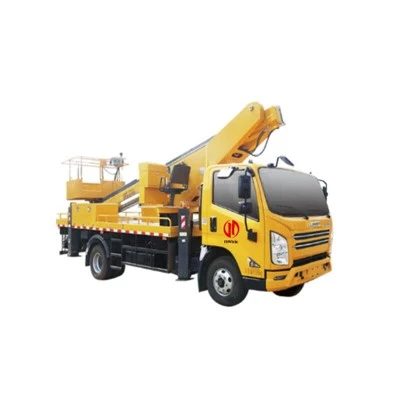
Don’t waste time with the wrong lift. Reach out to us to discuss your electrical work needs, and we’ll help you find the perfect scissor lift to get the job done safely, on time, and without the hassle.
Used Boom Lift References:
Occupational Safety and Health Administration (OSHA). 2023. Powered Platforms for Construction: Scissor Lifts and Boom Lifts.
National Electrical Contractors Association (NECA). 2022. Safety Guidelines for Working at Height in Electrical Construction.
American National Standards Institute (ANSI). 2021. Standard for Self-Propelled Elevating Work Platforms.
Yantai Quanrui International Trading Co., Ltd.
As one of the most reliable scissor lift manufacturers and suppliers in China, we’re featured by high quality customized products. Please rest assured to buy discount scissor lift made in China here from our factory. Contact us for pricelist and quotation.
Address: No. 278, Sanya Road, Gaotuan Town, Fushan District, Yantai City, Shandong Province, China
E-mail: Info@quanjin1588.com
WebSite: https://www.qr1588.com/
