If you’ve ever stood on a plant floor during a pressure test, watching a valve leak like a broken faucet, you know how costly that downtime hits. As a valve parts supplier who’s spent 12 years on the line, walking plant floors, troubleshooting seal failures, and learning from the mistakes of engineers who’ve been in this game longer than I’ve been in it, I can tell you: the tightness of valve parts isn’t a happy accident—it’s a combination of intentional design choices, rigorous manufacturing checks, and the right kind of vendor trust. Too often, I see plants cutting corners on parts that end up causing a shutdown, and that’s the exact problem our team set out to solve. Today, I want to walk through exactly how we ensure every valve part that leaves our warehouse stays tight, so you don’t have to. Valve Parts
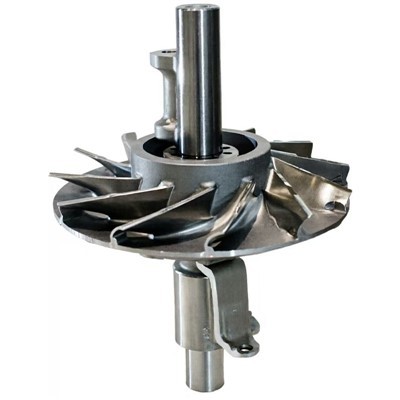
First, let’s start with the basics: what does “tightness” even mean for valve parts? It’s not just about no leaks at room pressure. It’s about holding that seal when the valve swings open and closed a thousand times, when the temperature spikes to 500 degrees or drops to -40, when abrasive slurry slams against the seat, or when hydraulic pressure jumps to 10,000 PSI. A valve’s job is to control flow, and the seal between the disc/ball/plug and the seat, plus the gaskets and packing around the stem, is the only thing keeping that flow from going where it shouldn’t. I once worked with a refinery in Texas that had a $20,000 an hour shutdown because a faulty stem packing failed mid-process—all because the supplier had cut corners on the packing material’s finish. That’s the kind of headache we don’t want our customers to have, so we start tightness long before a part even hits the machining line.
Let’s talk material selection, because if you pick the wrong material for the job, no machining will save you. Last year, we had a customer in the food and beverage industry come to us with a problem: their ball valves were leaking during CIP (clean-in-place) cycles, where they blast the lines with hot, acidic solution. Their old supplier had given them carbon steel seats with a basic rubber coating, which broke down after 200 cycles. We switched them to 316L stainless steel seats with an EPDM coating that’s tested to withstand 180-degree acid solutions, and now those valves go 10 times longer without a leak. The key here is matching material to the application’s “stress profile.” For high-pressure gas, we use forged 17-4 PH stainless steel seats because it hardens to 40 HRC without cracking, creating a tight, wear-resistant surface. For cryogenic applications, we switch to duplex stainless steel, which stays ductile at -196 degrees—no brittle failure mid-freeze. We don’t just stock one grade of steel; we have 12 different material blends for seats, stems, and gaskets, each tested in our in-house lab for compression set, corrosion resistance, and temperature stability. Compression set is a big one here—if a seal material compresses permanently after just a few uses, it won’t spring back to create a tight seal. We test every batch of gasket material by compressing it at operating pressure for 72 hours, then measure how much it rebounds before we let it go into production. Any material with more than 5% compression set gets rejected, no exceptions.
Next, machining precision. A seal is only as tight as the surface it’s mating with. If a valve seat has a tiny burr, or if the surface finish is too rough, the seal material can’t conform to fill in those micro-gaps, leading to slow leaks over time. We’ve invested in three 5-axis CNC machining centers that can hold a tolerance of ±0.0001 inches on critical seal surfaces—most standard valve machining is at ±0.0005, which might sound tiny, but that 0.0004 inch difference is the line between holding 1000 PSI and dripping 10 drops a minute. I remember when we first got those machines; our quality control team ran a side-by-side test: old-machined seats vs. new-machined seats. The old ones failed 3 out of 20 in a 2000 PSI pressure test, the new ones had zero failures. That’s the difference precision makes. We also use a proprietary honing process for seat surfaces, which leaves a controlled micro-roughness (Ra 0.8, if you’re familiar with surface finish standards) instead of a mirror finish. A mirror finish is too smooth—too much slippage between the seat and disc, plus no tiny grooves to catch and hold seal lubricant. The honed texture is perfect: it’s smooth enough to reduce wear, but has just enough grip to keep the seal material pressed tight against the metal. For stems and packing surfaces, we use a micro-polishing process that leaves an Ra of 0.4, so the packing slides easily without rubbing and wearing down prematurely. No micro-grooves here—even a 0.1 Ra on the stem can cause packing blowout because it cuts into the soft packing material as the stem moves.
Then there’s the assembly process, which is where a lot of suppliers cut corners. We don’t just bolt parts together and call it done. Every valve part is assembled by a technician with 5+ years of specialized training—no new hires on seal assembly. Our techs follow a documented torque sequence for every part, because over-torquing a seat can crush the seal material, and under-torquing leaves gaps. For example, when assembling a gate valve’s body and seat, we use a calibrated torque wrench set to 25 ft-lbs, and we recheck it after 10 minutes of rest to account for material settling. We also use pre-coat lubricants that are compatible with both the seal material and the process fluid—no generic grease. For rubber seals, we use a silicone-based lubricant that doesn’t break down when exposed to oil or water; for metal-to-metal seals, we use a graphite-based anti-seize that creates a micro-barrier between the two surfaces without interfering with the seal. The biggest rule in our assembly area: no touching mating surfaces with bare hands. The oil from skin is enough to cause a leak in high-purity applications, so we supply each tech with nitrile gloves and lint-free cloths, and every part gets a final wipe with isopropyl alcohol before assembly. I’ve seen other suppliers skip this, and they end up with parts that pass the initial test but leak in the field because of skin oil residue.
Testing, of course, is non-negotiable. But not just the basic 10-minute hydro test that most suppliers do. We have a three-stage testing process for every valve part: first, a leak test with helium for high-pressure and high-purity parts, because helium is small enough to escape even the tiniest gaps. We pressurize the part to 110% of its maximum rated pressure and seal it in a helium chamber; any leak rate over 1 x 10^-8 mbar·L/s gets rejected. Second, a cyclic life test, where we open and close the valve 10,000 times at operating pressure and temperature, then retest for leaks. Most suppliers only do 1,000 cycles—we do 10 times that, because real-world applications will have a valve opening and closing thousands of times a year. Third, a real-world simulation test in our in-house flow loop. We pipe actual process fluid (water, oil, slurry, whatever the customer’s application uses) through the valve at real flow rates and pressures, and monitor leaks over a 24-hour period. This is where we catch issues that lab tests miss, like how the valve reacts to abrasive slurry that wears down the seat over time. Last year, a customer asked us to test slurry valve parts, and during the flow loop test, we noticed that the seat’s edge was wearing unevenly after 12 hours. We adjusted the seat’s angle by 0.5 degrees, and the wear became uniform, eliminating the leak. That’s the kind of feedback you can only get from real testing, not just blueprints.
We also work closely with our customers to ensure long-term tightness, because it’s not just about the parts we ship—it’s about how they’re installed and maintained. A lot of leaks aren’t the fault of the part; they’re from improper installation: someone over-torquing the body bolts, or using the wrong gasket when replacing a part. So we provide free installation guides with every order, including torque specs, seating sequence, and lubricant recommendations. For repeat customers, we even offer a 30-day follow-up call to check if they’re having any issues, and if they are, we help troubleshoot whether it’s a part issue or an installation issue. We also keep a full batch record for every part we ship, so if a customer has a leak six months down the line, we can pull the manufacturing and testing records for that exact part and help them pinpoint the problem. Transparency like that builds trust, and trust is why our customers come back to us year after year.
I know there are cheaper options out there, but when it comes to valve parts, cheap is rarely worth it. A $5 valve seat from a discount supplier might pass the initial hydro test, but it could fail after a few hundred cycles, leading to a shutdown that costs $10,000 an hour or more. We price our parts fairly, because we know our customers would rather pay a little more for a part that works consistently and doesn’t cause downtime. Our reputation is on the line every time we ship a part, and that’s why we don’t cut corners on material, machining, assembly, or testing.
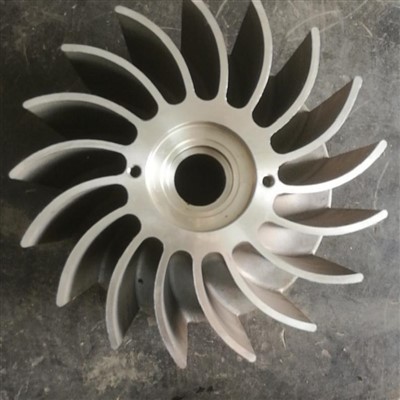
If you’re dealing with leaks, downtime, or inconsistent valve part performance, I’d love to connect with you to talk through your specific application. Whether you’re in oil and gas, food and beverage, pharmaceutical, or any other industry that relies on tight, reliable valves, we can work together to find the right parts for your needs. Don’t wait for a shutdown to test a new supplier—reach out now and let’s make sure your valves stay tight, no matter the pressure, temperature, or process.
Valve Castings References
- ASME B16.5: Pipe Flanges and Flanged Fittings, American Society of Mechanical Engineers, 2022.
- Valve Sealing Technology: Principles and Practice, J. F. Lancaster, CRC Press, 2019.
- Machining Precision for Fluid Power Components, International Fluid Power Society, 2021.
Shandong Shunye Stainless Steel Co., Ltd.
Address: Shandong Province, Binzhou City, Wudi County, Liubao Town, Zhangdong Road, Duliucun Village
E-mail: sales@wdshunye.com
WebSite: https://www.shunyecasting.com/
