If you’ve ever worked on a construction site, you know that cup-lock scaffolding isn’t just about stacking poles—it’s about trust. As a third-generation supplier of cup-lock scaffolding accessories, I’ve spent 18 years on job sites, poring over shipping manifests, troubleshooting late-night calls from foremen, and watching projects hinge on whether a single cup lock holds. I’ve seen the aftermath of a loose accessory: a misplaced guardrail, a crew member’s near-miss, a project delayed by a day while we scramble to correct a mistake. That’s why today I’m pulling back the curtain on how we ensure our cup-lock accessories connect tight, the kind of rigor we build into every order, and why this detail isn’t just a “quality check”—it’s the foundation of every safe lift, every level, every finish line. Cup-lock Scaffolding Accessories

Let’s start with the part most people don’t see: before an accessory ever leaves our warehouse, it’s gone through four layers of physical testing that don’t show up on a spec sheet. I learned this early on, back when my dad ran a small fabrication shop out of a rented bay in Ohio. We once shipped a batch of cup clips that worked fine in our lab, but failed on a job in Chicago because the forging had a micro-crack that only showed up under the stress of a 50-foot tower. That mistake cost us a client for six months, and it taught me that tight connections start before assembly—they start in the material.
Our cup lock heads, the central component that locks ledgers and standards together, are forged from high-grade Q235 carbon steel, not the recycled scrap some cheaper suppliers use. We run every billet through a spectral analyzer to confirm its carbon content falls between 0.18% and 0.22%—the sweet spot for flexibility and tensile strength. Too low, and the cup head bends instead of clamping; too high, and it snaps when a worker leans on a guardrail. We machine the cup’s inner teeth to a 60-degree angle, with a 0.2mm tolerance—any wider, and the pin won’t seat fully; any narrower, and it won’t slide into place during assembly. Last year, we invested in a robotic tapping machine that cuts the screw threads for our adjustable base plates with a consistent 2mm pitch, so when a foreman cranks a leveler, it locks tight without stripping.
But even the best parts mean nothing if they’re handled wrong on the job. I’ll never forget a call from a foreman in Houston who said our cup locks were “falling apart before we even lifted the first standard.” When I flew down to check, I found the crew piling accessories on the ground, dragging pallets through mud, and hammering pins in with sledgehammers instead of using a rubber mallet. That’s when I realized we can’t just ship good parts—we have to teach people how to use them. So every order we send out includes a 12-page printed guide, no jargon, with step-by-step photos: how to align a ledger’s pin with the cup’s notch, how to seat the pin so it clicks twice, how to check the clamp by trying to twist the ledger by hand. We also run free 30-minute on-site training sessions for any project over 10,000 square feet of scaffolding, because a 10-minute talk on day one prevents a 2-hour fix on day three.
One of the most common questions we get is: “Why do some cup locks loosen over time, even when assembled correctly?” The answer lies in two variables people often overlook: vibration and temperature. Scaffolding on high-rise sites gets hit with constant vibration from cranes, jackhammers, and even strong winds, which can shift loose pins. Our solution is a secondary locking washer that fits over the pin’s exposed end—easy to snap on, impossible to remove without a screwdriver, so it doesn’t fall off during disassembly. For projects in extreme temperatures, like the Canadian oil sands where winter lows hit -40°F, we test every accessory in a climate-controlled chamber to make sure the steel doesn’t become brittle and the teeth don’t shrink, which can create gaps in the connection. Last winter, a crew in Fort McMurray told us those secondary washers were the only reason their 80-foot scaffolding tower stayed tight through a blizzard that knocked out half the site’s temporary structures.
We also have a post-delivery quality check that’s unique to our business. Every week, our field service team pulls samples from job sites across the U.S. and Canada—10% of each batch, random, no notice—and sends them back to our lab for stress testing. Last year, we got a sample from a bridge project in New York where the cup locks were holding, but two of the base plates had slightly bent legs. We traced it back to a single stamping die that was wearing, so we swapped it out immediately, even though that batch had already been delivered. That cost us $12,000 in rush shipping for replacement parts, but it saved us from a potential safety incident—and that’s a trade I’m proud to make, even if my account manager hates me for it.
I know some suppliers will tell you “cup-lock is cup-lock, it all works the same.” But I’ve seen the difference. I’ve stood on a 12-story scaffolding platform in Miami where every connection clicked, no wiggle, and watched the crew frame a 10,000-square-foot penthouse in half the time the previous project took. I’ve sat in a conference room with an OSHA inspector who pointed to our accessories and said, “I haven’t seen a cup-lock connection that tight in 10 years.” Those aren’t just lines—they’re the results of every extra hour we spend testing, every extra dollar we spend on material, every extra day we spend training crews.
If you’re a project manager, foreman, or safety officer reading this, I get it. You’re swamped with deadlines, budgets, and OSHA checks. You don’t have time to worry about whether your cup-lock accessories will hold. That’s why we exist. We don’t just ship parts—we partner with you to make sure every connection is tight, every assembly goes smooth, and every worker goes home at the end of the day. Whether you need a small batch for a residential remodel or 50,000 accessories for a highway bridge project, we’ll send you a sample first, no cost, no obligation, so you can see for yourself the difference a tight cup-lock connection makes.
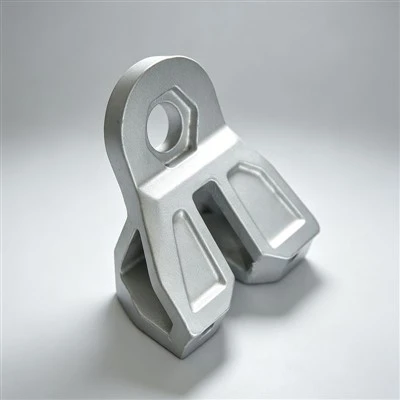
If you’re ready to stop worrying about loose scaffolding accessories and start building with confidence, reach out to our team to discuss your project needs. We’re here to help, no matter the size.
Disc-lock Scaffolding References
- Scaffold Industry Association. (2022). Best Practices for Cup-Lock Scaffolding Assembly and Inspection. SIA Technical Bulletin 04-22.
- Occupational Safety and Health Administration. (2021). Scaffolding Safety Standards: 29 CFR 1926 Subpart L. U.S. Department of Labor.
- Steel Construction Institute. (2020). Design and Use of Modular Scaffolding Systems. SCI Publication P405.
- American Society for Testing and Materials. (2019). Standard Specification for Steel Forgings, Carbon and Low-Alloy, for General Industrial Use. ASTM A668/A668M-19.
Hebei Shuangtai Mold Frame Technology Co., Ltd.
Hebei Shuangtai Mold Frame Technology Co., Ltd. is one of the most professional cup-lock scaffolding accessories manufacturers and suppliers in China. With abundant experience, we warmly welcome you to wholesale cheap cup-lock scaffolding accessories from our factory. If you have any enquiry about customized service, please feel free to email us.
Address: Nanluzhuang Industrial Zone, Majiawu Town, Renqiu City, Cangzhou City, Hebei Province
E-mail: 1297629160@qq.com
WebSite: https://www.stscaffoldng.com/
