What’s up everyone, if you’re in the market for niobium metal — you know, that shiny, high-performance metal that’s popping up everywhere from aerospace parts to medical implants — you’ve probably wondered how it handles one of the most common elements around: oxygen. As a niobium metal supplier, I get this question all the time, whether it’s from a manufacturing engineer asking how a component will hold up in high heat, or a hobbyist just curious why this metal is so weirdly stable in some situations and reactive in others. Today I’m breaking down exactly how niobium reacts with oxygen, keeping it real, no stuffy textbook jargon that’ll make your eyes glaze over. Niobium Metal

First off, let’s start with the basics: niobium (that’s Nb on the periodic table, atomic number 41 for anyone who slept through high school chem) is a transition metal, right? It’s got a bunch of cool traits — super strong, ductile, non-toxic, even superconducts at really cold temps — but its relationship with oxygen is what makes it stand out from, say, iron or aluminum. Let’s get one thing straight first: niobium doesn’t just “rust” like iron does. Iron rusts because once that flaky oxide layer forms, it doesn’t stick, it keeps flaking off, exposing fresh metal to more oxygen, and before you know it, your part’s eaten away. Aluminum? It forms an oxide layer too, but it’s thin, and pretty protective, right? Niobium? It’s different, but not in a way that’s just “better” — it depends on the temp, the environment, even how pure your niobium is.
Room temp first, because that’s what most of us deal with day to day. If you take a chunk of 99.9% pure niobium metal, and leave it sitting on a shelf in open air, what happens? Nothing obvious, at first. Wait a few hours? You’ll start to see a thin, invisible oxide layer forming on the surface. It’s super thin — like 2 to 5 nanometers thin — so you can’t see it, touch it, or even scratch it off easily. But here’s the big thing: that layer is self-limiting. That means once it hits that 5 nanometer mark, it stops growing. It doesn’t get thicker over time at room temp, because the oxygen can’t diffuse through that tiny layer any faster to react with the niobium underneath. That’s why pure niobium is so stable for long-term storage, right? You can leave a niobium bar in a warehouse for years and it’ll look just as good as the day you got it, no corrosion, no degradation. I’ve got stacks of niobium sheet in our warehouse that we’ve had for almost a decade, and they’re still as bright as the day we unpacked ’em.
But wait, that’s at room temp. Crank up the heat, and niobium’s whole vibe changes. Let’s say you’re working with niobium for a project that gets hot — like aerospace turbine components, or parts for a chemical processing plant that runs at 500°C (932°F) or higher. That thin oxide layer? It’s not gonna cut it anymore. Once niobium hits temperatures above like 200°C (392°F), the oxidation rate starts picking up. By the time you get to 400°C (752°F), it’s reacting fast enough that you’ll start noticing discoloration on the surface — first a pale blue, then yellow, then brown, then even gray or black as the oxide layer gets thicker. At temps above like 800°C (1472°F), niobium reacts with oxygen pretty aggressively. It’s no longer forming that thin, protective self-limiting layer — now it’s forming a thicker oxide (Nb₂O₅, for the chem nerds) that doesn’t stick as well, and it can even start to flake off. And here’s the catch: once that oxide starts flaking, it exposes fresh niobium to more oxygen, so oxidation keeps going until the whole part is eaten away. That’s why we always tell customers working with high-temp niobium parts to either coat them (like with a protective ceramic coating) or use them in environments with little to no oxygen — or pick an alloy, because pure niobium isn’t always the best for super high heat.
Now, what about impurities? That’s a big one for us as a niobium metal supplier, because not all niobium is the same. If your niobium has even a tiny bit of other elements — like carbon, nitrogen, or even just a little bit of iron — how does that affect its reaction with oxygen? Turns out, impurities mess with oxidation big time. For example, if niobium has some hydrogen in it (from processing, maybe), that can make the oxide layer more porous, so oxygen can get through easier, making oxidation faster. And if you alloy niobium with other metals, like titanium or zirconium, you can change how it reacts with oxygen too. I’ve had a customer making high-temperature furnace parts that was having issues with pure niobium oxidizing too fast at 1200°C, so we switched them to a niobium-zirconium alloy, and that slowed oxidation down by like 70%. That’s the stuff we deal with every day, not just textbook facts.
Wait, another thing people ask: what about niobium in other environments, not just open air? Like, if it’s in water? Or in a chemical solution? Oh, right, the oxide layer on niobium is super stable in neutral or slightly acidic water, which is why niobium is used for medical implants — like hip replacements, or stents. The oxide layer is biocompatible, doesn’t react with body fluids, so it doesn’t cause issues. Even in some corrosive chemicals, niobium holds up. But if it’s in really strong acids, like hydrofluoric acid or hot concentrated sulfuric acid, that oxide layer gets eaten away, and then niobium will react with the acid, not just oxygen. But that’s a niche case, most of the time, niobium’s oxide layer is its superpower for resisting corrosion.
Let’s talk about how we handle oxidation in our operations too, because as a niobium metal supplier, we work with the metal at high temps all the time when processing it. When we’re melting niobium to cast ingots, or annealing sheet metal, we can’t just heat it up in open air — that would cause way too much oxidation, mess up the purity and the surface quality. So we use vacuum furnaces, or inert gas atmospheres (like argon or helium) when we heat niobium above 500°C. That way, there’s almost no oxygen around to react with the metal, so we get a clean, consistent product for our customers. That’s a practical tip you don’t get in most science articles, right? We actually live this every day.
Now, let’s clear up a common misconception: niobium is often confused with tantalum, another metal in the same group on the periodic table, and people ask if their oxidation reactions are the same. Tantalum forms an even thicker oxide layer, right? And it’s even more stable at higher temps than niobium. That’s why you’ll see tantalum used for more extreme high-heat applications, but niobium is lighter and cheaper, so it’s better for a lot of projects where you don’t need that ultra-high temp stability. Their oxidation behaviors are similar, but niobium’s layer is more prone to breaking down at really high temps than tantalum’s, which is important to know if you’re picking the right metal for your part.
Another thing we see: when niobium is in powder form, not solid metal. Oh man, that’s a big one. Niobium powder has way more surface area than solid niobium, so it reacts with oxygen way faster. In fact, fine niobium powder can even be pyrophoric — that means it can catch fire spontaneously if it’s exposed to air at room temp, because all that surface area means the reaction with oxygen is fast enough to generate heat, which speeds up the reaction more, until it ignites. That’s why when we ship niobium powder, we always package it in sealed, inert-atmosphere containers, and tell customers to handle it carefully, no open flames near it. We’ve had a few scares early on when we first started shipping powder, so we learned that lesson the hard way, that’s why we’re so upfront about oxidation risks for different forms of niobium.
Let’s circle back to real-world use cases to make this concrete. Take the aerospace industry, which uses a ton of niobium for parts like jet engine components and rocket nozzle liners. Those parts get super hot — sometimes up to 1600°C — so pure niobium would oxidize away in minutes. But they use coated niobium, or niobium alloys that are designed to resist oxidation at those temps. Or the medical field, like I mentioned before, niobium stents: they’re small, not super high temp, so the thin oxide layer stays intact, no reaction with body tissue, so they’re safe to use. Even jewelry! A lot of people don’t know that niobium is used for hypoallergenic jewelry, because its oxide layer can be dyed different colors, and it doesn’t react with skin or sweat, so it’s great for people with metal allergies. That’s a way different use than a jet engine, but the same oxidation principle applies.
So, putting all this together: how does niobium react with oxygen? It depends on three main things: temperature, the form/purity of the niobium, and the environment. At room temp, it forms a thin, self-limiting oxide layer that protects the metal from further oxidation for years. As temp goes up, oxidation speeds up, and above ~800°C, pure niobium forms a non-protective oxide that keeps growing, which can damage the part. Impurities, alloys, and surface area (like powder vs solid) all change how fast that reaction happens, and niobium’s oxide layer is super stable in neutral or slightly acidic environments, which is why it works for so many different applications.
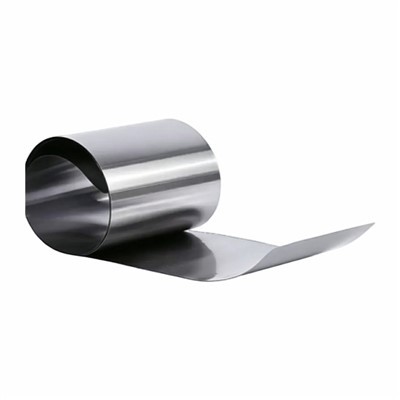
Now, if you’re working on a project that involves niobium metal — whether you need solid sheet, ingots, powder, or custom parts — and you’re worried about how oxygen will affect your component, we’re here to help. We’ve been supplying niobium to all kinds of industries: aerospace, medical, electronics, energy, and more, for years, so we know exactly how to tailor materials to resist oxidation or leverage niobium’s properties for your specific use. Just reach out to our team to talk through your project, and we can give you all the details on purity, alloys, processing methods, and even tips to prevent oxidation in your application. We’re not just a supplier, we’re a resource for anyone working with niobium, so don’t hesitate to get in touch.
Molybdenum Products References
- Ashby, M. F., & Jones, D. R. H. (2012). Engineering Materials 1: An Introduction to Properties, Applications, and Design. Butterworth-Heinemann.
- Buschow, K. H. J., & Cahn, R. W. (Eds.). (2001). Materials Science and Technology: A Comprehensive Treatment, Vol. 3: Structural Materials. Wiley-VCH.
- Li, J., et al. (2018). High-Temperature Oxidation Behavior of Niobium Alloys for Aerospace Applications. Journal of Alloys and Compounds, 740, 556-564.
- The Niobium Institute. (2020). Niobium Properties and Applications Technical Guide. International Niobium Association.
- Zhang, Y., et al. (2021). Oxidation Kinetics of Pure Niobium at Elevated Temperatures. Corrosion Science, 187, 109542.
Address: Wangjing Science and Technology Park, Guangshun North Street, Chaoyang District, Beijing
E-mail: sales@moly-tungsten.com
WebSite: https://www.moly-tungsten.com/
