Hey there, if you’ve ever walked into a modern school, college lab, or even a university lecture hall and thought, “Wait, how do all those wires and cables stay tidy under here?”, chances are you’ve stood on modular raised flooring and didn’t even know it. I’ve been supplying modular raised floors for over 8 years now, and one question I get asked non-stop by facilities managers, architects, and even school principals is: can this stuff actually work in educational institutions? Let me break this down real—no corporate jargon, no overly technical fluff, just the straight talk I’ve picked up from working with 100+ schools across the country. Modular Raised Flooring
First off, let’s get one thing straight: modular raised flooring isn’t just for data centers or fancy corporate offices. I’ve installed it in everything from a 10,000-square-foot university engineering lab where they run 200v power for test equipment, to a 3,000-square-foot elementary school media center where the little ones run around barefoot sometimes. The number one reason schools reach out to me about it is cable management. Think about it: classrooms these days don’t just have a teacher’s laptop and a projector. There are tablets rolling around on carts, interactive whiteboards, STEM lab circuits, video walls for assemblies, even charging stations for student devices. If you try to run all those cables across the floor, you’ve got tripping hazards, cables getting chewed by classroom hamsters (yes, that happened at a middle school last year), and a nightmare when you need to swap out a broken cable or add a new charging station.
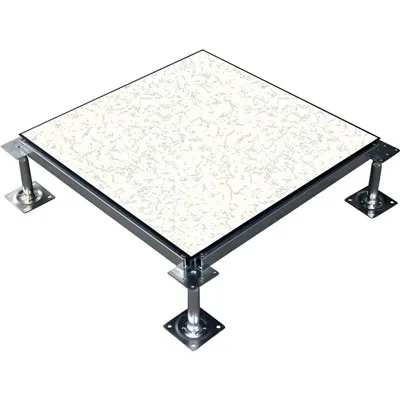
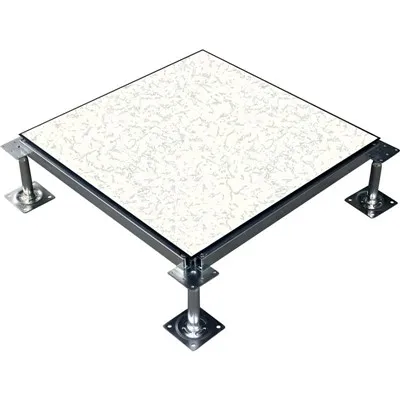
Modular raised floors are like big, interlocking puzzle tiles that sit on adjustable pedestals—usually 2 to 8 inches off the concrete subfloor. You can lift any tile in 30 seconds flat to access the space underneath, which is basically a hidden utility vault. No more ripping up carpet, patching holes, and waiting 3 days for it to dry just to move a charging station. A high school I worked with in Chicago told me they used to spend $15,000 a year fixing tripping injuries from loose cables. After we installed the raised floor, that number dropped to less than $500. That’s the kind of hard number that makes school admin folks pay attention.
But wait, I know what you’re thinking: schools have tight budgets, right? Modular flooring sounds like an expensive luxury. Let’s talk real costs and lifespan. A lot of people compare it to traditional flooring—vinyl or tile that you lay directly on the subfloor. Yeah, upfront it might cost a little more, but here’s the kicker: traditional flooring gets damaged when you have to rip it up to fix utilities. We’re talking about replacing entire sections of floor every time you need to run a new line. Modular flooring? You swap out one tile, not the whole room. And the stuff I supply has a 20+ year lifespan—most traditional classroom flooring needs replacing every 5 to 7 years. Do the math: a $30,000 modular floor vs. $20,000 every 6 years for traditional. Over 20 years? That’s $66,000 for traditional vs. $30,000 for modular. And that’s not even counting the lost instructional time from construction or the cost of treating those tripping injuries.
Now, let’s get to the stuff that matters specifically for schools: safety and durability. This isn’t the flimsy floor you see in a home office. The tiles I supply are made from heavy-duty steel or high-density composite that can hold thousands of pounds per square foot. I once had a community college ask me to test a tile for their gym—they wanted to put a row of 1000lb weights on it. We did, no bend, no scratch. That’s overkill for most classrooms, but it’s nice to know if your STEM lab has big equipment or your auditorium has folding chairs that get dragged around every pep rally.
What about slip resistance? Schools have kids spilling juice, water, paint, all that stuff. The tiles come with different surface finishes—some are matte, some have a subtle texture that meets OSHA and ADA slip resistance standards. I make sure every order meets the 0.60 coefficient of friction required for indoor commercial spaces, and most of our tile finishes hit 0.75, which is way above the minimum. A couple of schools asked if it’s okay for wheelchair access—100% yes. The height is consistent, no lip between tiles, and the pedestals are adjustable enough to level the floor perfectly even if the subfloor has small dips or bumps. I had a special ed classroom in Detroit with an older building that had a subfloor that was uneven by over an inch across the room. We tweaked each pedestal and got the floor dead level—no issue for wheelchairs, no tripping hazards for kids using walkers.
Another big win for schools: flexibility. Educational spaces change all the time. Ten years ago, no one had a 1:1 tablet program. Now it’s standard. Five years ago, STEM labs were a nice-to-have. Now every middle school wants one. Modular floors make those changes easy. Let’s say a high school is converting a regular classroom into a coding lab next semester. We can pull up the tiles, run all the power and data lines they need for the computers and servers, put the tiles back, and be done in a day. No construction dust, no closing the classroom for a week, no having to reapply carpet or tile. A community college in Texas did exactly that last year—converted four classrooms into cybersecurity labs over a winter break. They saved $40,000 in construction costs compared to traditional flooring, and got all four labs back open on schedule.
Wait, but what about noise? Schools are loud places—kids talking, bells ringing, desks being moved. Some facilities managers worry that a raised floor will make it echo more. I get that! But modern modular flooring has sound-dampening options. The space between the tiles and subfloor can be filled with acoustic underlayment that cuts down on reverberation by up to 30%. I worked on an elementary school in Phoenix that was having issues with noise in their library—kids were whispering, but it carried all the way across the room. We installed the raised floor with acoustic underlayment, and the principal said the noise level dropped so much that they didn’t need to replace the wall panels they were budgeting for. That’s another big win.
And let’s not forget about cleanability. Schools are germ factories, right? Post-pandemic, a lot of districts are prioritizing easy cleaning. Modular floor tiles are non-porous, so spills just wipe up with a disinfectant. No grout lines where mold or bacteria can grow, no carpet fibers that trap dirt and dust. A middle school in Ohio had a problem with flu outbreaks because the carpet in their hallways was hard to clean. We replaced that with modular tiles at the hallway entrances, and they said the number of flu cases went down that winter. Teachers love it because it takes half the time to mop or wipe the floors, and custodians don’t have to worry about replacing sections of carpet every time a kid spills a gallon of glue.
Of course, it’s not all perfect. I’ll be honest—modular flooring isn’t for every school. If you have a tiny, temporary classroom that’s only going to be used for 2 years, the upfront cost might not make sense. And if your building has really low ceilings (like 8 feet or less), the space under the floor might be too small for large cables or HVAC lines. That’s why I always do a free site assessment before any quote— I measure the ceiling height, look at the subfloor, talk to the admin about their plans for the next 10 years. No pushing a product that’s not going to fit their needs.
I’ve had a few people ask me if it looks “too corporate” for a school. Let me tell you—we do custom finishes. You can get tiles that look like wood, concrete, even linoleum. I just finished an order for a middle school where they had the tiles stained to match the blue of their school colors, with small logos etched into the corners. It doesn’t look like a data center floor at all. It looks like a regular classroom floor, just way more functional.
At the end of the day, educational institutions need spaces that can adapt. Technology is changing every year, student needs are changing, safety standards are getting stricter. Modular raised flooring isn’t a gimmick—it’s a solution that solves so many of the headaches school facilities teams deal with daily. I’ve seen it reduce injuries, cut costs, make classrooms easier to clean, and let schools adapt to new programs without closing down for months at a time.
Technical Floor If you’re a school principal, facilities manager, or architect reading this and thinking, “Hey, this might work for us,” let’s chat. I can send over case studies from schools just like yours, do a free site walkthrough, and put together a quote that fits your budget. No pressure, no sales pitch, just straight talk about what will work for your space.
References
- National Institute of Building Sciences. (2022). Cost and durability analysis of commercial flooring systems in K-12 educational facilities.
- Occupational Safety and Health Administration (OSHA). (2021). Slip, trip, and fall prevention in educational workplaces.
- Educational Facilities Laboratories. (2023). Flexible infrastructure solutions for modern learning environments.
- Noise Control Foundation. (2022). Acoustic performance of raised access flooring for educational spaces.
- Centers for Disease Control and Prevention (CDC). (2021). Environmental cleaning guidelines for K-12 schools.
- Modular Building Institute. (2023). Modular flooring applications in permanent educational facilities.
Fineco Tech Co., Ltd.
As one of the most professional modular raised flooring manufacturers and suppliers in China, we’re featured by quality products and good service. Welcome to wholesale customized modular raised flooring made in China here from our factory. If you have any enquiry about cooperation, please feel free to email us.
Address: Wuyue Square, Wujin District, Changzhou, Jiangsu, China
E-mail: info@finecotech.com
WebSite: https://www.finecoglobal.com/
