If you’ve ever stood in a large machine shop watching a massive metal workpiece get milled, bored, and contoured with micrometer-level precision, chances are it was on a high-end double column machining center. As someone who’s spent the last two decades supplying these machines to aerospace, energy, and heavy equipment manufacturers, I can tell you that not all double column models are created equal. The ones that deliver consistent, reliable performance day in and day out for critical applications share a set of non-negotiable features that set them apart from mid-range or entry-level alternatives. Let’s break down what makes a high-end double column machining center worth the investment. Double Column Machining Center
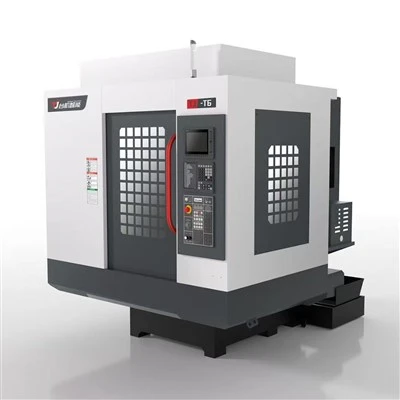
First and foremost is the structural rigidity of the machine frame, and this is where high-end models separate themselves immediately. Double column machines, by design, have two vertical columns flanking the worktable, creating a gantry-style setup that’s ideal for machining large, heavy workpieces—think aircraft wing spars, turbine casings, or heavy construction equipment frames. But without a frame built to handle the extreme cutting forces and long spans involved, even the best control system or most precise tooling won’t perform as intended. Low-cost double column machines often use cast iron frames with thin walls or generic casting alloys that can warp under sustained load, leading to chatter, dimensional drift, and premature wear. High-end suppliers like ours specify class 30 or higher cast iron, an alloy with high tensile strength and vibration damping properties, and design the frame with ribbing patterns tailored to distribute cutting forces evenly across the entire structure. We also run finite element analysis (FEA) on every frame design before production to simulate how it will behave under real-world cutting conditions, from roughing cuts with a 5-inch diameter end mill to finishing passes that demand perfect surface finish. This level of engineering means the frame won’t deflect more than a few micrometers even when a 10,000-lb workpiece is clamped to the table during heavy machining—a standard that just isn’t met in entry-level models.
Next, the linear motion system is another make-or-break feature. A double column machining center’s axes (X, Y, Z) determine how smoothly and accurately the tool moves across the workpiece. Entry-level machines often use rolled ball screws and linear guideways, which are inexpensive but have limitations in precision and load capacity for high-demand applications. High-end models, on the other hand, use ground ball screws for the feed axes, which are cut to a tighter tolerance, have less play, and deliver more consistent positioning accuracy. We also use preloaded linear roller guideways instead of standard linear bearings. Roller guides can carry much higher radial and thrust loads, which is crucial when machining heavy workpieces where the tool is exerting constant downward force into the table. Preloading removes any backlash in the system, so when the control sends a command to move the tool 0.001 mm, it moves exactly that distance—no more, no less. Many of our high-end models also feature linear motor drive options for faster, more agile motion in the X and Y axes, perfect for high-speed contouring jobs where reducing cycle time without sacrificing precision is key. Linear motors eliminate the mechanical link of ball screws, so there’s no wear from rotating components, and they can accelerate and decelerate at much higher rates, cutting cycle times by 20-30% compared to traditional drive systems for many applications.
Spindle performance is another critical feature that defines a high-end double column machining center. The spindle is the heart of the machine; it’s what holds the cutting tool and delivers the power and speed needed to remove material. For heavy roughing cuts, you need a spindle with high torque at low speeds, while for finishing operations, you need a spindle that can run at high speeds with minimal vibration and runout. Entry-level spindles often have a belt-driven design, where a motor outside the spindle turns a belt connected to the tool holder. This is a cost-effective setup, but belt-driven spindles have more vibration, can’t reach the same high speeds, and suffer from belt wear that requires regular maintenance. High-end double column machines, especially those intended for a mix of heavy roughing and precision finishing, use either direct-drive motor spindles or built-in gear head spindles, depending on the application. Direct-drive spindles eliminate belts entirely, mounted directly to the tool holder, so they run smoother, have less runout (often less than 0.002 mm at the tool tip), and can reach speeds of 20,000 RPM or higher, perfect for aluminum aerospace parts that require high surface quality. For jobs that need both high torque and high speed, like machining titanium turbine blades, gear head spindles with multiple gear ratios let you switch between low-speed high-torque mode for roughing and high-speed low-torque mode for finishing without changing tools or manually adjusting settings. We also balance every spindle at speed before installation, so when it’s running at maximum RPM, there’s no uneven weight causing vibration that would ruin a part or damage the machine.
Tool change and work handling systems are often overlooked but essential features of a high-end double column machining center, especially for unattended operation—a big priority for manufacturers looking to maximize productivity. A double column machine typically has a large worktable, so you need a tool changer that can handle a large number of tools without slowing down. Entry-level machines often use a chain-style tool changer with 20-40 tools, which means you have to stop every 2 minutes to change tools for high-speed jobs, leading to wasted time. High-end models use disk-style or carousel tool changers that hold 80, 120, or even 200 tools, depending on the model, with tool change times of less than 5 seconds. Some of our newest models even feature dual tool changers for simultaneous loading and unloading of tools, cutting tool change time in half and allowing for continuous machining without interruptions. For work handling, high-end double column machines often come with automatic pallet changers (APCs) that let you load a new workpiece on a separate pallet while the machine is cutting a part on the main table. This means the machine is never sitting idle waiting for a part to be loaded, which can double the throughput for many jobs. Entry-level APCs are often limited to one pallet, but high-end models have two or more pallets, and some can handle pallets weighing up to 20,000 lbs, perfect for large workpieces that require heavy clamping. We also integrate custom fixture design into our work handling solutions, so manufacturers can set up multiple fixtures on a single pallet to machine several small parts at once, further increasing efficiency.
Control system technology is another key differentiator. The control is the brain of the machine, and it’s what translates CAD/CAM programs into precise movements of the tool. Entry-level machines use basic, outdated controls that lack advanced features like high-speed look-ahead, adaptive machining, and 5-axis interpolation. High-end double column machining centers use modern, industry-leading controls like Sinumerik, Heidenhain, or Fanuc’s latest high-performance series, which offer real-time processing of machining commands. High-speed look-ahead is especially important for complex contouring jobs; it lets the control preview up to thousands of line of code ahead, so it can adjust feed rates in real time to maintain the desired accuracy. For example, when the tool is approaching a tight radius in a part, the control will slow the feed rate slightly to prevent overshooting, then speed back up once the radius is complete. Adaptive machining is another feature we prioritize in our high-end models; it uses sensors to monitor cutting forces during operation, and automatically adjusts the spindle speed and feed rate to maintain a consistent chip load. This is incredibly useful when machining materials like titanium or hardened steel, where variations in the workpiece’s hardness can cause tool wear or breakage. Adaptive machining reduces tool wear by up to 40% and prevents scrapped parts due to overloading, making it a huge value-add for high-stakes jobs. The control also offers advanced diagnostic tools, so operators can monitor machine performance in real time, identify potential issues before they cause downtime, and access remote support from our technicians if there’s a problem.
Finally, build quality and after-sales support are part of what makes a double column machining center “high-end,” not just the physical features of the machine itself. We’ve seen many manufacturers buy low-cost double column machines that deliver poor performance within a year, because they were built with cheap components and no support network. High-end suppliers like ours build every machine with quality components from trusted manufacturers—spindles from leading spindle makers, linear guides from Japanese or German brands, and control systems with proven track records. We also subject every machine to a 72-hour full-load test run before it leaves our facility, machining a test workpiece that simulates real production conditions, to ensure every feature works as intended. But beyond the initial build, after-sales support is critical. We offer 24/7 technical support, on-site training for operators and maintenance teams, and planned maintenance programs to keep machines running at peak performance for decades. A high-end double column machining center is an investment that should last 20 years or more, so having a supplier that’s there to support you long after the sale is part of the value.

If you’re in the market for a double column machining center, don’t be fooled by price alone. The features that set high-end models apart—rigid frame design, precision motion systems, high-performance spindles, advanced tool handling, smart control technology, and reliable support—will save you money in the long run by reducing downtime, improving part quality, and increasing productivity. Whether you’re machining large aerospace components, energy industry parts, or heavy construction equipment, a high-end double column machining center is the backbone of a high-output, high-precision machine shop. If you’d like to learn more about our line of double column machining centers and how they can meet your specific production needs, we encourage you to reach out to our team to schedule a consultation. We can help you assess your workload, recommend the right model, and answer any questions you have about features, capabilities, and support.
Vertical Machining Center References:
- Modern Machine Shop. (2022). "Structural Rigidity in Large Machining Centers: Key to Precision and Productivity." Cutting Tool Engineering.
- Heidenhain Corporation. (2021). "High-End Control Systems for Large Format Machining Centers: Capabilities and Applications." Technical White Paper.
- Davis, J.R. (2019). Gear Materials, Properties, and Manufacture (2nd ed.). ASM International.
- SME. (2020). "Adaptive Machining: Reducing Costs and Improving Part Quality in High-Stakes Manufacturing." Manufacturing Engineering Magazine.
- Japan Machine Tool Builders’ Association. (2021). "Performance Standards for Large Double Column Machining Centers." Industry Technical Report.
Guangdong Taiji Intelligent Equipment Co., Ltd.
Address: Room 107, Building 15, No. 911 Jian’an Road, Chang’an Town, Dongguan City, Guangdong Province
E-mail: sale@gdtaijicnc.com
WebSite: https://www.gdtaijicnc.com/
